
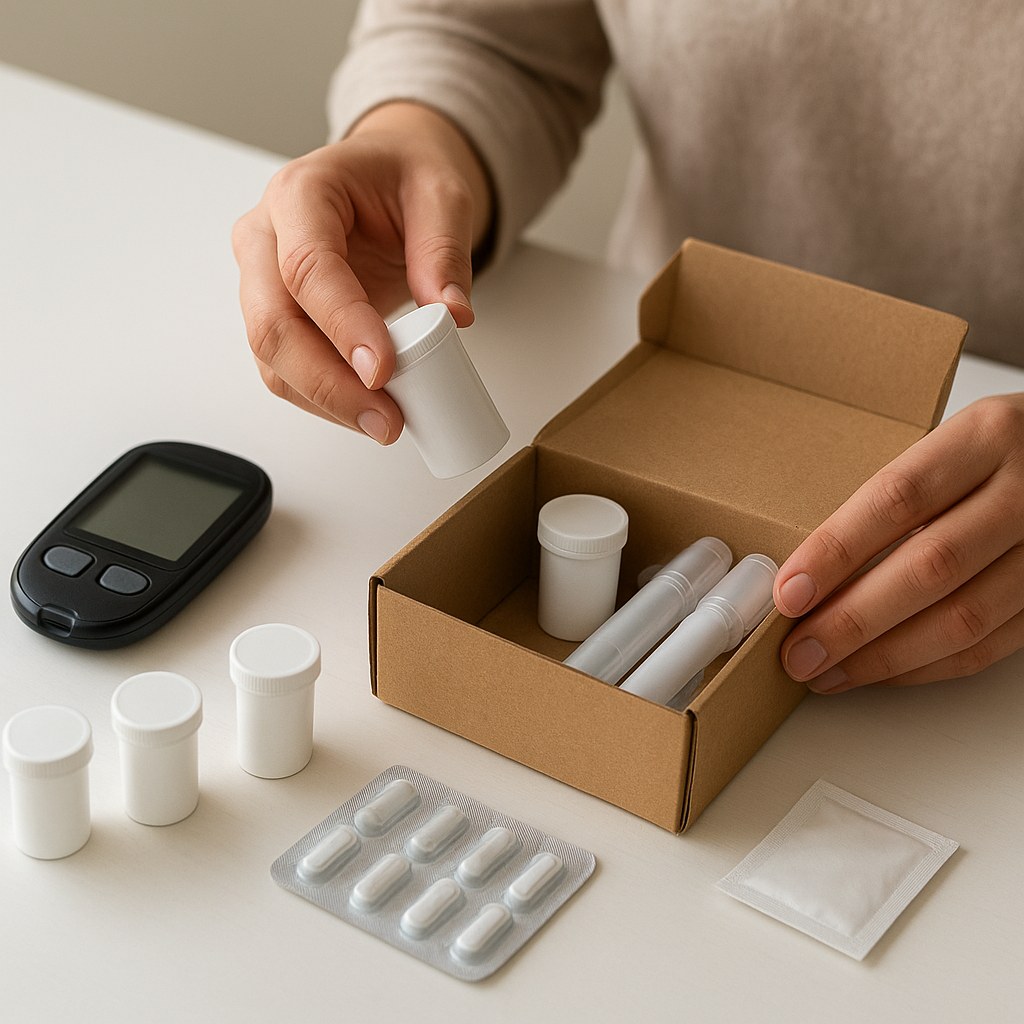


If you have extra diabetes supplies in a closet, you may be wondering whether you can sell them for cash. Before requesting a quote, check what you own, whether you’re allowed to sell it, and who you’re dealing with. A buyer’s willingness to pay doesn’t establish that a product is safe for someone else to use.
The FDA is direct about test strips. In its consumer update, How to Safely Use Glucose Meters and Test Strips for Diabetes, the agency recommends buying new, unopened vials and not buying pre-owned test strips. That warning includes unused strips previously owned by someone else. Improper storage, expiration, tampering and contamination of opened vials can put users at risk. A clean box and a future expiration date don’t resolve those concerns, and the checklist below doesn’t establish secondhand supplies as medically safe.
Keep what you need for your own care first. Don’t skip tests, stretch sensors past their use time, or set aside insulin to sell. If your prescription or treatment plan has changed, talk with your care team before you move any supplies out of the house.
Sort sealed from suspect
Pull everything into one spot and sort it into two piles. Keep one pile for boxes that are factory-sealed with a readable date. Put everything else in a second pile for review.
Look at seals first. If a carton is open, torn, taped shut again, or missing a required seal, move it out of the sell pile. Check the expiration date next. If the date is smudged or hard to read, move it out too. Think about storage as well. Compare the product’s labeled storage requirements with where you actually kept it. Don’t offer boxes that were stored outside those conditions.
This first sort can save you trouble later. It stops damaged goods from moving forward and gives you a clear list to work from as you check the remaining boxes.
Don’t try to fix packaging. Re-taping or swapping boxes to make a lot look neat only hides their condition. Leave original cartons intact so the buyer can assess what you actually have.
Different products have different storage instructions. Don’t assume the same temperature or humidity limits apply to every box. If you don’t know how a product was stored, leave it out rather than guessing. Proper storage matters, but it doesn’t cancel the FDA’s warning about pre-owned test strips.
Confirm ownership and permission to sell
Before you think about price, make sure the supplies are truly yours to sell. Eligibility isn’t the same for every product. It can depend on ownership, prescription status, payer or program terms, and the rules that apply where you live.
Don’t assume a change in treatment automatically gives you permission to sell leftover boxes. Check how each item was obtained and whether insurance, a public benefit program or another agreement imposes restrictions. A buyer accepting the product doesn’t settle those questions for you. When you’re unsure, ask your plan administrator, pharmacist or a qualified legal adviser about the relevant requirements before you list anything.
Keep your own care separate from the sale pile. Don’t cut back on testing to build up stock or order extra with a plan to resell. If your doctor changed your devices or your needs dropped, keep enough for daily use plus a backup, then review what’s left.
Keep purchase receipts or order records that show where the supplies came from. You don’t need to share private treatment notes to explain why you have extra boxes.
Keep insulin and other prescription medicines out of this selling checklist. For unused medication, ask your pharmacist about appropriate handling and disposal. Don’t treat medicines as interchangeable with the unopened devices a supply buyer advertises.
Check dates and recall status
Dates and seals help determine whether a buyer will consider a box. Look for a clear expiration date printed on the outer carton. If the date is smudged or hard to read, set the box aside. Ask the buyer how much time must remain before expiration for that specific product. A factory seal and readable date are not proof of medical safety or permission to sell.
Write down what each box shows. Copy the brand and lot number exactly as printed, with the serial number on a separate line when it’s there. Keep that list with your photos so you can check recalls while boxes stay shut. Clear notes prevent mix-ups when you have more than one lot.
Check each lot against the FDA recall database. Use the search tool and enter what you copied from the carton. If you find a match, follow the manufacturer and FDA instructions for that recall. Don’t try to sell recalled goods or toss them in a way the notice warns against.
Photos do a lot of the talking. Take clear shots of the outer carton, the expiration date, the lot code, and the seal. Lay boxes flat in good light and keep prescription labels out of frame.
Ask about the exact product, not just the brand
A product category alone isn’t enough to request a useful quote. A sensor, pod or test-strip box needs to be identified by its full product name, model and package size. Copy those details from the carton rather than relying on memory. Count unopened boxes separately from the number of individual units printed on each box.
For example, an inventory could list two sealed cartons of the same sensor model, with a different expiration date beside each carton. Don’t combine them into one entry if the dates or lot codes differ. That makes it easier to match an offer to the items you would actually hand over.
Ask whether the buyer accepts that exact version and quantity before arranging pickup or shipping. Acceptance can depend on the product, date and condition, so an offer for one model doesn’t necessarily cover another. Keep used items and sharps out of the sale pile. If the source of a box is unclear or its labeling looks altered, don’t offer it. Photos help communicate packaging details; they aren’t proof of authenticity or safe storage.
Choose where to sell and get terms in writing
If you’ve established that an item is eligible for sale, you can ask a specialist supply buyer about its process. If you’re considering a public listing instead, check the platform’s rules for the exact product before posting. Don’t assume that a listing being technically possible makes it permitted, or that a public marketplace checks buyers for you.
Start with basic contact details. Look for a real street address and a working phone number that’s published on the site. Read how the buyer describes pricing, acceptance, fees, and returns. Look for clear written steps for what to send and how payment is handled. Vague promises and pressure to ship fast are reasons to pause.
Rather than shipping to an anonymous online buyer, some sellers prefer to contact a regional buyer about diabetic supplies and ask about its inspection and payment procedures. For example, the Jacksonville site says it looks for unopened Dexcom sensors, Omnipod pods, FreeStyle Libre sensors and test strips from customers in Jacksonville and Northeast Florida. The same site notes acceptance depends on specific product, expiration date, packaging condition and demand. It also advertises local pickup and a free quote. Those details give you a starting point for direct questions before you commit.
Whatever buyer you consider, get
it in writing before you ship. Ask for a written quote, what causes a price change, and who pays return shipping if items are rejected. Ask how and when payment is sent, whether by check or confirmed digital transfer. Keep that reply saved with the buyer’s name and date.
Pack and hand off without damage
Use the packaging and carrier the buyer names in its instructions. If no carrier is named, ask which one to use before you box anything. Place cartons upright with padding so corners don’t crush, and fill gaps so boxes don’t slide and rub against each other.
Heat is easy to overlook. Don’t leave packed boxes in a car while you run errands or at an exposed drop-off point. Follow the manufacturer’s storage requirements during handoff, not just while the goods are in your closet. If the proposed shipping method can’t maintain the required conditions, don’t send them that way. If local pickup is available, agree on the location in advance and consider a public place during daylight.
For an approved shipment, ask about tracking, insurance and who is responsible for loss or damage. Keep the receipt until the transaction is settled.
Confirm pickup and shipping arrangements before committing. Get any agreed changes in writing, and keep a copy of the item list for both sides.
Don’t open sealed cartons to add extra padding inside. Leave inner seals alone. If a box arrives damaged from the maker, leave it out and tell the buyer before you ship. Take a photo of the sealed shipping box with the label on before you hand it over.
Document the deal and know when to stop
Write down everything you send. List each product, lot number, expiration date, and quantity, then match that list to your photos. Save the tracking number next to the list. Save payment confirmation in the same folder when it arrives.
Protect your privacy while you document. For photos, cover personal details on pharmacy labels without removing or damaging the carton. Keep product names, dates, lot codes and seals visible. Don’t cut labels off or obscure required product information. Before handoff, ask how personal information will be handled and what can appropriately be covered. Share only the information needed for the transaction.
There’s a clear point to stop. If the seal is broken or the date has passed, don’t list it. If storage fell outside the manufacturer’s requirements, or you can’t establish how the box was stored, leave it out. Follow product-specific and local disposal guidance. A potential payout isn’t a reason to pass along questionable supplies.
Be careful with payment arrangements that leave no trail. Don’t accept an overpayment with a request to refund the difference. Don’t move chat off the buyer’s official channel to take a faster payment. Check payments directly through your bank or payment service rather than relying on a screenshot. Ask your bank about check-verification concerns; money appearing available doesn’t necessarily mean a check is genuine.
Good records protect both sides. They show what you sent and when, and can help settle disputes before they grow.
Before trying to get cash for diabetic supplies, work through these checks and keep what you need for your care. The central misconception is that an unopened box automatically makes resale appropriate. It doesn’t. Ownership restrictions, storage history, recall status and the FDA’s warning about pre-owned test strips still matter. If a sale isn’t appropriate, ask your pharmacist or the manufacturer about handling or disposal rather than looking for a less cautious buyer.
Leave a Reply